Taranaki Geoheat Discovery Challenge
Could petroleum wells across Taranaki deliver geothermal heat, rather than being plugged and left behind? This project explores the feasibility, and how legacy petroleum data could establish a regional geoheat economy.
What if Taranaki's old petroleum wells could help power its energy future? Hundreds of suspended and shut-in onshore wells across the region could be repurposed to deliver geothermal heat for industry, buildings and communities.
The Taranaki Geoheat Discovery Challenge: Assessing geoheat potential in legacy petroleum assets, is using existing data to explore whether these wells could be redeployed for geothermal heat before they are permanently abandoned.
Building on an initial scoping study and literature review, the Challenge brings together technical experts, industry and community stakeholders to find out what it would take to turn decades of petroleum data and infrastructure into a practical, low-emissions energy source for the region.
What is geoheat - and why does it matter?
Most people are familiar with the high-temperature geothermal systems of the Taupō Volcanic Zone, used widely across New Zealand for electricity generation and typically exceeding 150°C.
Taranaki's resource is different: generally low-to-mid temperature (up to and around 120°C), sitting below the electricity generation threshold but still highly useful for uses such as:
- Industrial process heat, either directly or using ground-source heat pumps for higher temperatures
- Space heating for factories, offices, or homes
- District heating schemes for industrial or residential areas
- Swimming pools and spas
- Greenhouses and horticulture
Watch Earth Science NZ's video below for more information on geoheat.
What can geoheat be used for
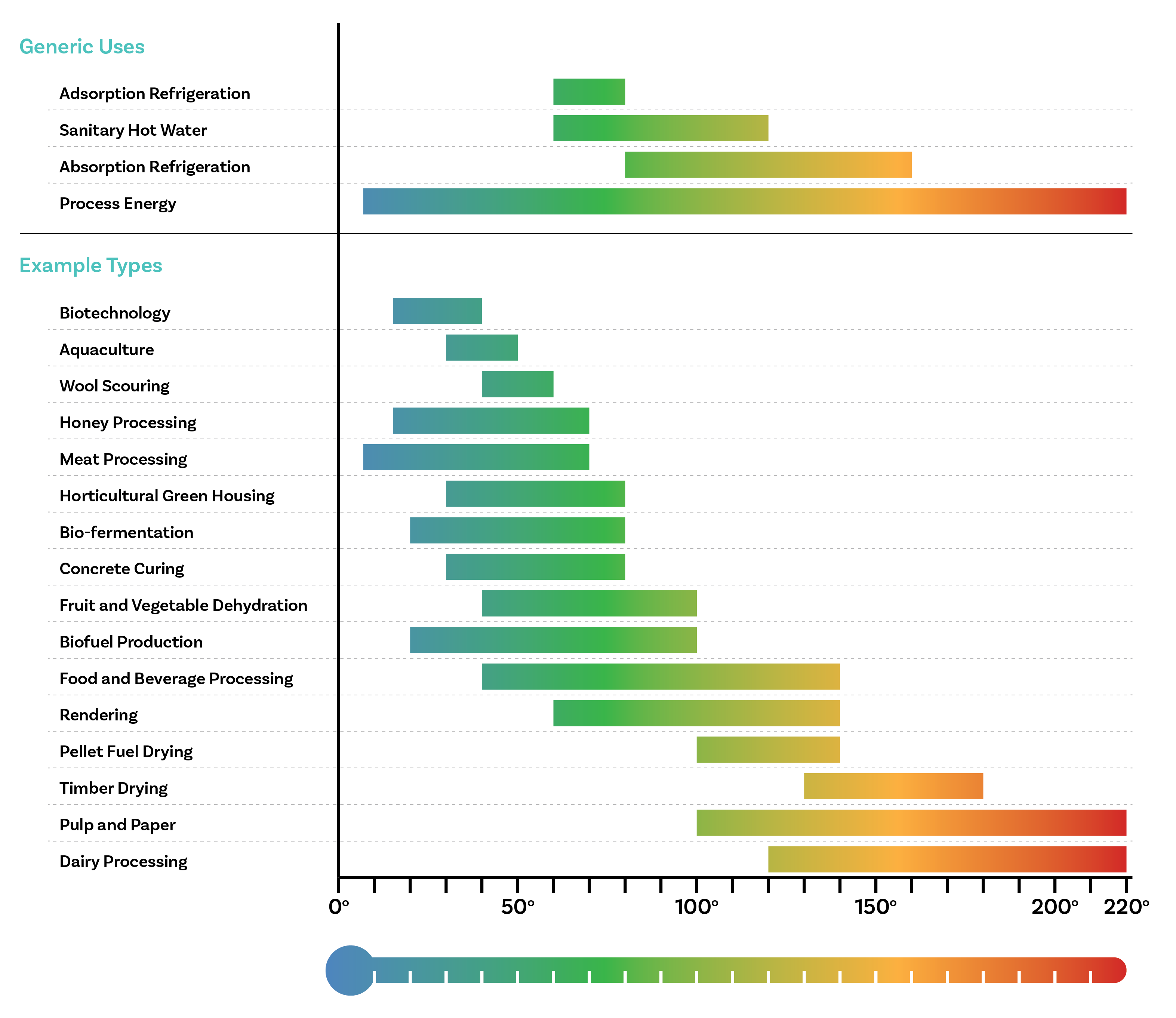
The image below shows examples of common direct agricultural and industrial uses for geoheat that we expect to be able to find in Taranaki (up to and around 120°C).
Why Taranaki: existing wells and 60 years of data
When developing geoheat projects, the greatest cost is upfront in the form of drilling a new well, and the greatest unknown is what is underground: how hot is it, and what might the ground water flow be?
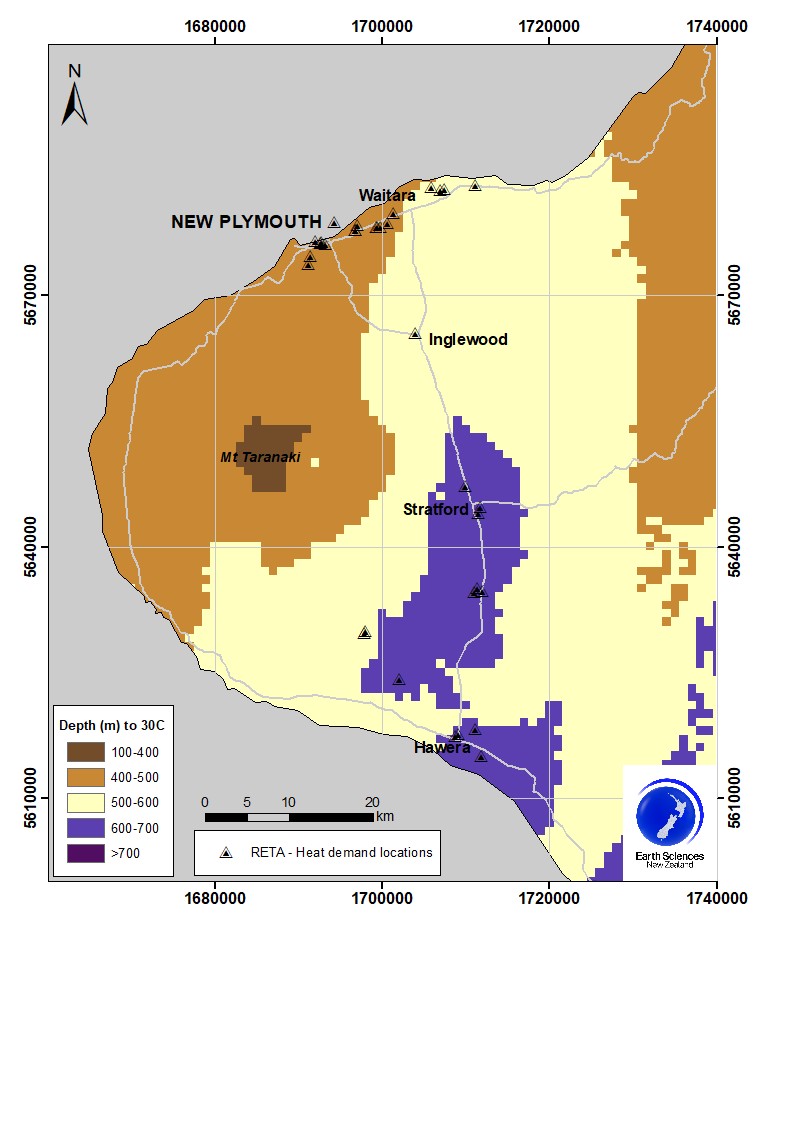
Six decades of petroleum development in Taranaki have produced something invaluable for geoheat: hundreds of existing wells and an extensive bank of subsurface data, including temperature and flow logs, geological studies and borehole records (i.e. map and graph below). By repurposing wells that are already in the ground, and drawing on data that's already been collected, the cost and risk of local geoheat development may drop significantly. Any geoheat project in Taranaki starts with a head start that most regions simply don't have.
Note: Onshore suspended and shut-in wells are the focus of this work. Abandoned wells are generally less suitable for repurposing.
.png)

How the Taranaki Geoheat Discovery Challenge works
The challenge has been developed to allow robust and pragmatic de-risking of Taranaki's geoheat opportunities while using our petroleum legacy, in a way that will provide the best outcomes for geoheat in the region.
The scoping study
In late 2025, Ara Ake commissioned Earth Science NZ (formerly GNS) and GeoExchange, two of New Zealand's leading geothermal specialists, to assess the geoheat potential across the Taranaki region. The key findings are:
- Taranaki has a medium heat flow which is hotter in the north, and has significant scope for geoheat development
- There may be significant opportunities for cost savings to reuse petroleum wells, but that also comes with technical risks that need to be thoroughly assessed
- Subsurface heat and water flow data provided by petroleum operations could provide a real advantage to developing geoheat opportunities
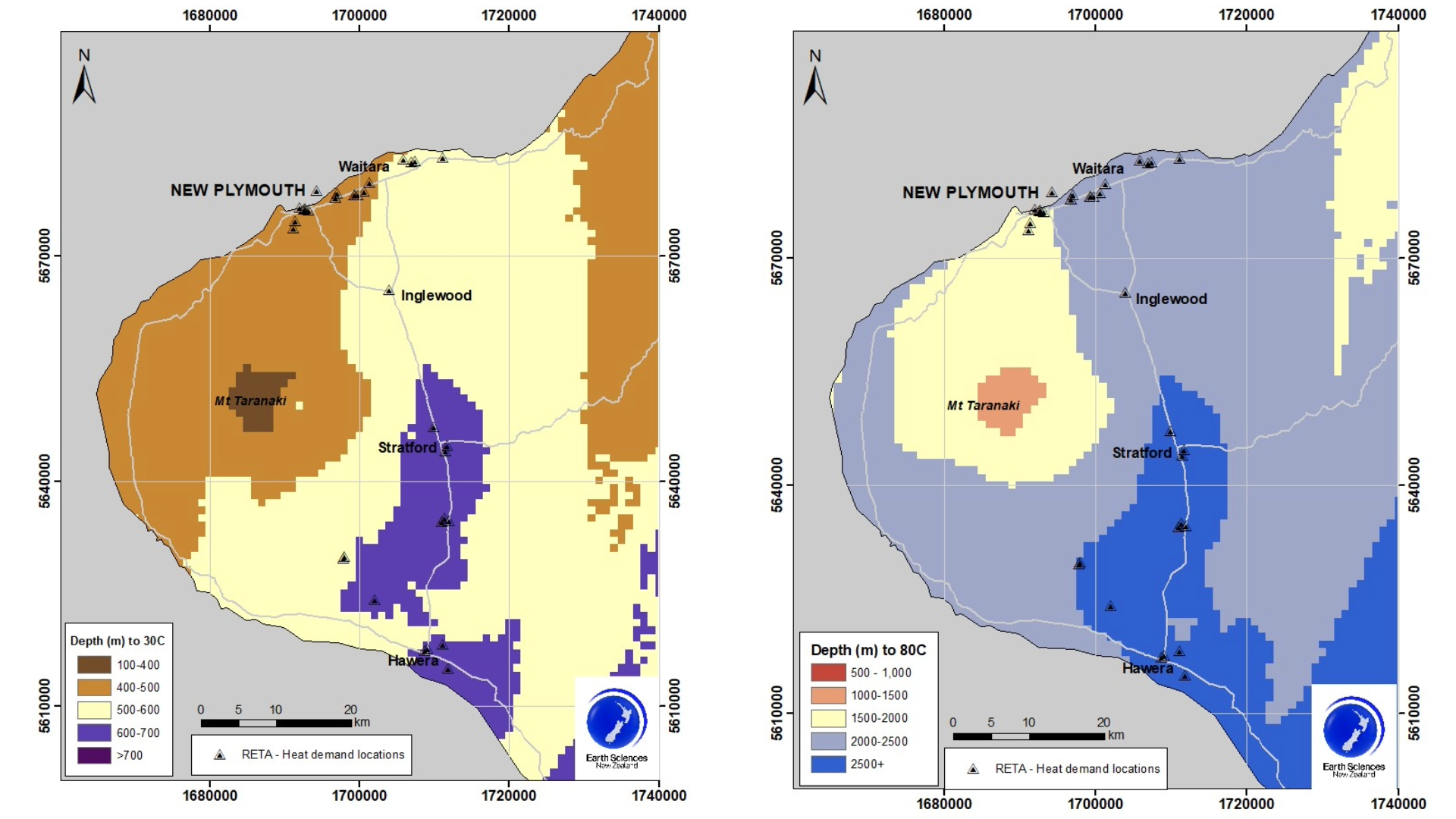
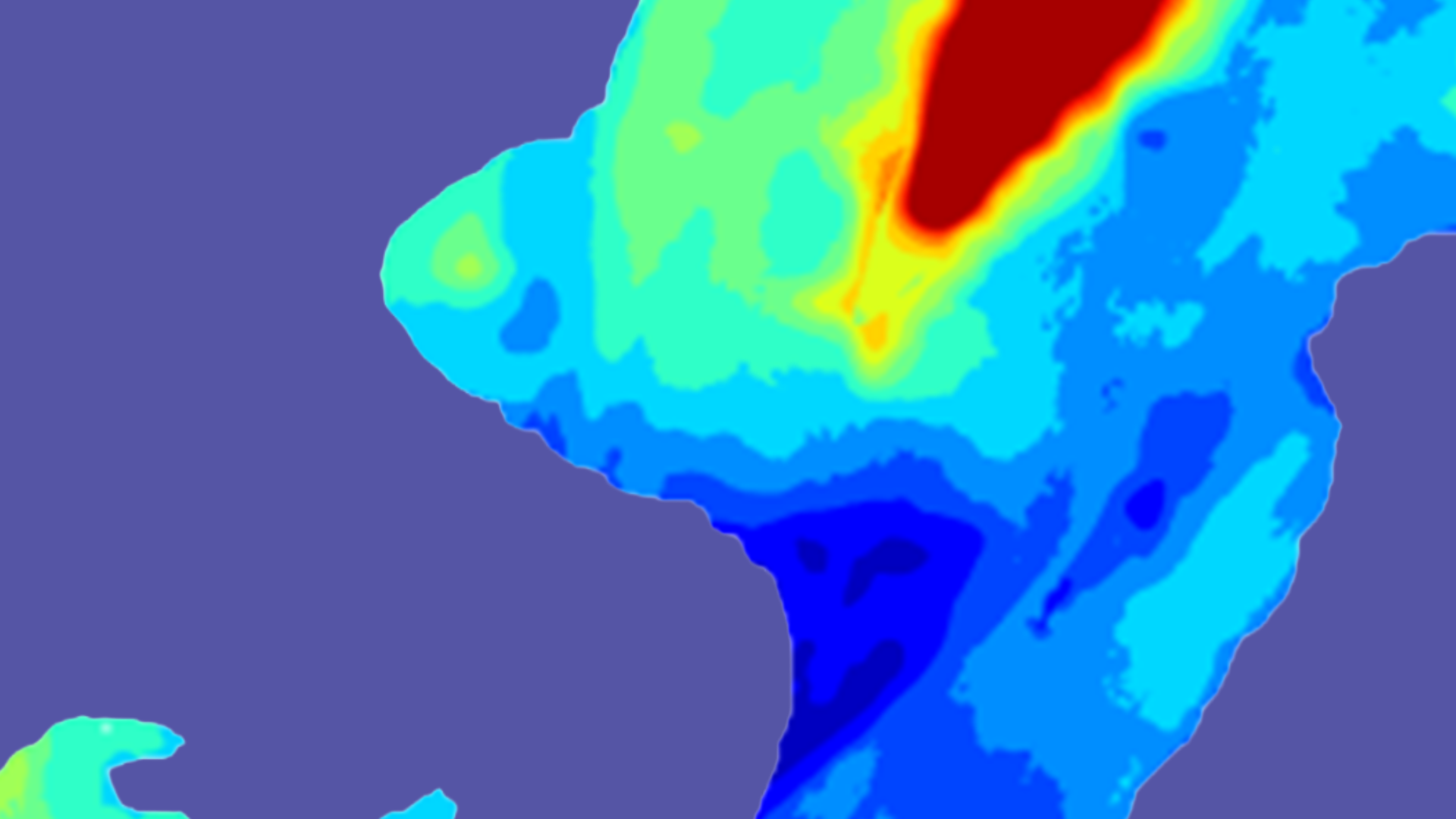
The image above is from the scoping study and shows the modelled depth to a defined temperature for the Taranaki region. Left, modelled subsurface depth at which 30ºC is reached and the image on the right shows the modelled subsurface depths at which 80 ºC is reached, both show the locations of key Taranaki heat users.
The literature review
In early 2026, GLS Consulting conducted a deep dive into scientific, technical, and industry petroleum well redeployment projects worldwide. This has identified successes, lessons learned, best NZ analogies and has informed the further development of Taranaki Geoheat Discovery Challenge.
Take a look at the relevant international projects analysed as part of this project
Development Use Opportunities (DUOs)
Building on those findings, Ara Ake has developed four Development Use Opportunity categories, which are possible ways in which Taranaki's wells and data can we used for regional geoheat, and which warrant further investigations and development.
Ara Ake is now working with stakeholders to build a technical programme to de-risk opportunities in each DUO, with the goal of establishing pilot projects where possible.
Work programmes may include flow testing, subsurface studies (temperature, fluid chemistry, reservoir connectivity), thermal output modelling and end-use assessment.
Supporting research
Alongside the DUO work programmes, the Challenge will produce two key reports:
- Legal review: An expert review of the legal and regulatory challenges and opportunities associated with repurposing petroleum wells, and potential pathways to address them.
- Tangata whenua perspectives: An overview of cultural considerations, opportunities, and challenges linked to repurposing Taranaki wells for geoheat.
Alignment with national priorities
This project aligns with key national geoheat priorities including:
- From the Ground Up – A strategy to unlock New Zealand's geothermal potential
- NZ Geoheat strategy
- Geoheat Action Plan 2026-2027
Timeline and next steps
- January 2026: Delivery of scoping report
- 21 May 2026, 9am-1pm: Geoheat energy workshop in Taranaki.
- 18-24 months: Roll out of the work programme
- Sept 2027: Public summary report at conclusion, with hopeful pilots
How to get involved
The Challenge is open to collaboration. Get in touch if you want to know more or be involved in this project. Whether you're a well owner, an industry heat user, a technology provider, a researcher, or simply interested in Taranaki's energy future, we'd like to hear from you.
- 21 May 2026, 9am-1pm: Geoheat energy workshop in Taranaki. Please register if you are interested in learning more about Taranaki's geoheat resource and this project.
Contact us to get involved or learn more: info@araake.co.nz
Media
- 13 May 2026: New project to explore whether Taranaki's old petroleum wells could heat its energy future
- 26 May 2026: Ara Ake and ESNZ join forces to accelerate geoheat with new Action Plan